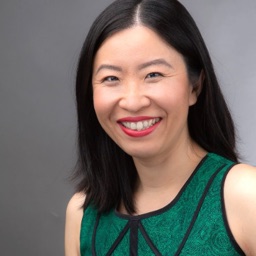
Hi, I'm Joanna, and welcome to In the making with Joanna Liu.
Lately, I've been working on courses and practice sessions for NoCrastination. A surprising amount of that work involves making quite small decisions. I might be looking at a sentence on a course page, wondering whether someone who has never heard of us would understand it.
I can ask AI for another version. Within seconds, I have several options. Each sounds plausible. One feels confident, another feels friendly, and a third seems to explain everything I forgot to mention.
Now I have more material, but I still have to choose.
That's the moment I want to spend some time with today. What happens between receiving an answer and deciding that it's an answer I want to use?
It seems like a small part of the process. Yet when I think about the work I want to build, it's a part I can't afford to pass over.
When AI gives you five good answers
Let me use an ordinary example. Imagine you're writing an invitation to a beginner workshop. You want people to feel welcome, and you also need to explain what they'll actually do. You ask a tool to improve the description. It returns a paragraph about unlocking potential and transforming the way you work.
It sounds polished. For a moment, you feel relieved. Then you try reading it as someone deciding how to spend their evening. You realise you still don't know what will happen in the room.
Hesitation is information
That small feeling of hesitation contains useful information. Something in the writing hasn't met the purpose you had for it.
Perhaps you can't immediately explain why. You just know that if someone asked you what the paragraph meant, you would need another paragraph to answer.
I've started to think of that hesitation as a place to investigate. I don't have to accept it as proof that the draft is wrong. But I can stay with it long enough to discover what I'm noticing.
Maybe the language promises more than the activity can deliver. Maybe it describes an emotion when the reader needs a practical detail. Once I can name the concern, I can make a more useful change.
This is one way judgment begins to develop. We notice a difference between what something appears to do and what we need it to do. Then we try to understand that difference.
Go back to the original question
The difficulty is that an unfamiliar decision can feel uncomfortable. It's tempting to seek another opinion before I've examined my own. With AI, another opinion is always available. I can keep asking until I've accumulated so many reasonable options that choosing becomes harder than it was at the beginning.
At that point, I may need to return to the original question. Who is this invitation for? What would they need to know before deciding to come?
Those questions give me something concrete to judge against. I can ask whether the description explains the activity, rather than asking whether it sounds impressive enough.
I think that distinction matters when you're building a personal brand, too. A sentence may sound like successful marketing and still be a poor expression of what you believe. If I use it simply because it sounds familiar, I'm borrowing a tone before deciding whether it belongs to the work.
I want people to gradually understand how I think through what I put into the world. That requires me to understand my own choices well enough to explain them.
Ask for feedback that tells you something
Of course, having a reason doesn't guarantee that a decision is good. I could sincerely prefer a description that nobody else understands. My reaction is a starting point. The reader's experience has to enter the process as well.
Suppose I show the invitation to someone and ask what they think. They might say, "It looks good." That's encouraging, but it doesn't tell me very much.
If I ask what they expect to happen at the workshop, I get a different kind of information. Perhaps they describe a lecture, when I'm planning a practical session. Now I have a specific misunderstanding to work with.
I can revise one part and see whether that helps. The decision becomes an experiment with a purpose. I don't need to invent a whole new identity every time a sentence fails.
Over time, these small encounters can change what I notice. A phrase that once seemed clear begins to feel vague. I start recognising the questions a newcomer might have. I can explain why I removed something, even if it was beautifully written.
Trust that lets you change your mind
That's the kind of confidence I'm interested in developing. I want it to come from contact with the work. I can choose, learn what happened, and adjust without treating the adjustment as an embarrassment.
There is a vulnerability in this. If I decide for myself, I can't completely hide behind the recommendation I followed. I may have to say, "I thought this would help, and I was mistaken."
But being able to say that seems essential to doing work responsibly. Otherwise, trusting myself becomes confused with defending myself. Every new piece of information starts to feel like a challenge to my authority.
I'd rather develop a form of trust that allows me to change my mind. I can take my own thinking seriously while accepting that I haven't seen the whole situation yet.
Sometimes the wisest exercise of judgment is recognising that I need someone else's expertise. If I don't understand a technical issue, confidence alone won't make the system reliable. I need to ask a useful question and listen to the answer.
Even then, I still have responsibilities. I need to understand the limits of what I've been told and decide how it applies to the situation in front of me. Asking for help can be part of exercising judgment.
The craftsperson's last look
I find it useful to imagine a craftsperson examining a piece of work before handing it over. They may have used excellent tools. They may have learned techniques from people with much more experience. Yet there is still a moment when they look closely at the thing itself.
Does it serve the person who will use it? Is there something that needs attention before it leaves their hands?
That image helps me bring the question back to ordinary work. For a course page, attention might mean removing a promise I can't support. For a podcast, it might mean changing a sentence I can't honestly say aloud.
The standard becomes connected to a particular responsibility. It becomes easier to see where care is needed, and where another round of polishing would add very little.
Keep a small record of why you chose
I don't expect to reach a point where every choice feels clear. Building something means entering situations I haven't encountered before. Some uncertainty will remain even after careful thought.
What I can practise is leaving myself a small record of why I chose. It can be a sentence: "I used this example because a beginner needs to picture the first step."
Later, when I look at the response, I can compare what I expected with what happened. If the example confused people, I have something specific to learn. If it helped, I begin to understand what made it useful.
This is also how I understand the phrase I often return to in Chinese: xiu xing zhong chuang zao, chuang zao zhong xiu xing. Bringing awareness into what we create, and allowing the act of creating to deepen that awareness.
A small decision becomes a place to observe myself. Am I choosing something because it serves the work, or because it protects me from feeling uncertain? I may not like the answer, but understanding it gives me a chance to respond differently.
Try this week
If you'd like to try something this week, choose one small decision you're about to hand over completely. Before you ask for another recommendation, write down what you think a good result would need to do.
Then use whatever support is helpful. Look at the suggestions through the question you've written. Make a choice, and keep a short note about your reason.
When you have feedback, come back to it. You may find that your reason was incomplete. That's useful. You're beginning to recognise how your judgment works in practice.
For me, learning to trust myself is becoming less dependent on the feeling of certainty. I'm learning to stay involved in the decision, including the part where I discover something I missed.
The tools will keep changing. I want to keep developing a relationship with my work that allows me to explain a choice and take responsibility for it.
I'm Joanna. Thank you for listening to In the making with Joanna Liu. I'll see you next time.