
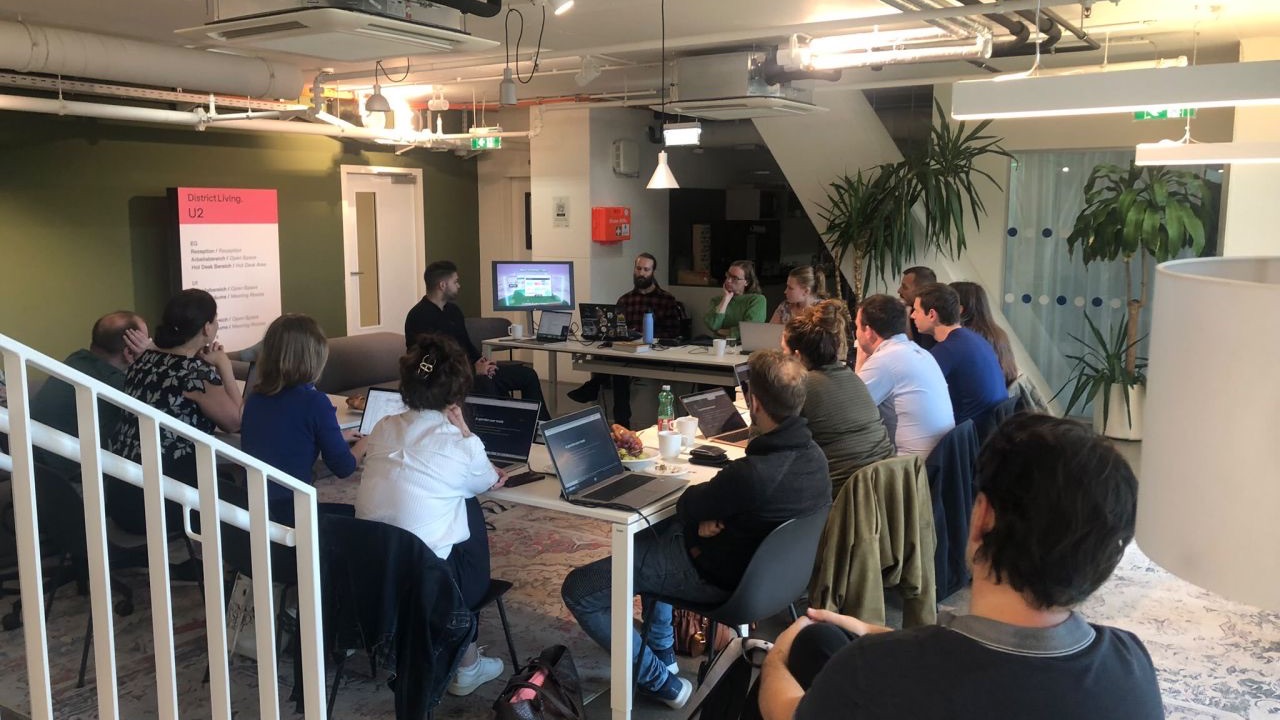
Last week, after coworking, a group of us went out for dinner. We have a little ritual when we eat together: everyone anonymously writes down a question they’ve been thinking about recently. Then we bring those questions into the conversation.
One question last night got us talking:
“Is it still worth learning in the age of AI?”
It’s a question I’m still thinking about today.
When AI can explain a concept, summarise a book, write code, or help us work through a problem, it’s reasonable to wonder where our own effort should go.
Something that once took hours to research might now take a few minutes to explore. A task that required a particular skill might suddenly become accessible to a beginner.
What is still worth learning?
So what is still worth spending time learning?
At dinner, we approached the question from another direction:
What would happen if we stopped learning?
Perhaps, at first, it would feel efficient. We could ask for what we needed, use the answer, and move on.
But how would we decide what to ask?
How would we recognise what was missing? Or notice when an answer sounded convincing but didn’t quite make sense?
The more you know about something, the more there can be to notice.
A small detail becomes interesting. An explanation raises another question. You begin to see connections that weren’t visible to you before.
That makes me think learning shapes our attention, as well as our ability to find answers.
Of course, we don’t need to understand a subject before we’re allowed to ask about it. That would make beginning almost impossible.
AI can help us find our first questions, too.
We can say: “I don’t understand this yet. Where should I start?” We can ask for an example, try an explanation in our own words, and explore where our understanding breaks down.
Having an explanation vs. working with it
There’s a difference, though, between having an explanation available and being able to work with the idea ourselves.
I might read a clear answer and feel that I understand it. Then someone asks me a slightly different question, and I realise how much I still haven’t worked out.
That moment can be uncomfortable. It can also be the beginning of something interesting.
Is learning a strong interest in your life?
Another question came up around the table:
Is learning itself a strong interest in your life?
I like this question because it makes the conversation personal.
We might learn to qualify for a job, finish a project, or solve a practical problem. Those reasons matter. Saving time on something we don’t particularly want to master can be useful.
But what do we choose to learn when nobody is asking us to?
Perhaps you want to understand why a friendship changed. How to grow something on your balcony. What makes a piece of music move you. How to express an idea you’ve never quite found the words for.
Would getting an immediate answer satisfy that curiosity?
Sometimes, perhaps. Other times, the experience of exploring is part of what we want.
You try something. You get confused. You notice a little more. You return with a better question.
I find myself wondering what place that process will have in a life where answers are increasingly easy to obtain.
And whether we can remain curious across the length of that life.
Curiosity won’t always feel energetic. There may be periods when we’re tired, overwhelmed, or simply trying to get through the day. I wouldn’t want lifelong learning to become another demand to constantly improve ourselves.
There can be room for rest, and room for a small question that eventually draws us forward again.
A question to take with you
I’m leaving last night’s conversation with a question of my own:
If AI gives us more time and help to learn, what would we actually like to understand?
What are you learning right now and what makes you want to keep going?