
Today, I want to talk about something that rarely appears on a business plan, but belongs in the life around it. When work takes up so much of our attention, how do we make room for love?
Perhaps you’re building a business, changing careers, or working towards something that matters deeply to you. Your days are full. Even when you close your laptop, part of your mind is still working,yet, you might also want someone to share an ordinary evening with. Someone to go for a walk with, laugh with, or tell about the small thing that happened on your way home.
Both desires can exist together. The difficulty is finding room for them in the same life.
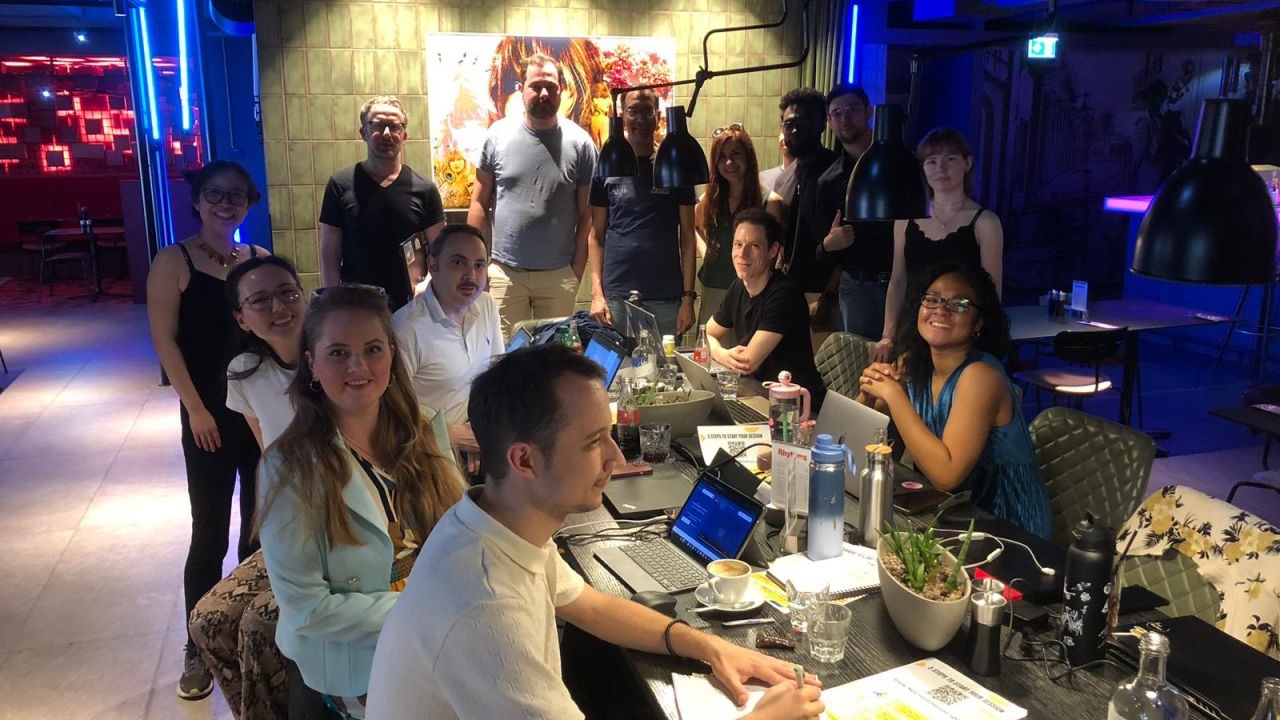
Recently, in our Monday online book club, we’ve been reading The Courage to Be Disliked. Our conversations have touched on work, self-worth, personal responsibility, and close relationships.
One distinction we explored was between our choices and another person’s response. We can take responsibility for our actions, while accepting that we cannot decide what someone else will feel or choose.
That discussion gives me a starting point for today’s question: What kind of space can we realistically offer another person? And what kind of relationship would we want to build in that space?
Time, and being available
Let’s begin with something practical: time.
When you’re creating something, there is rarely a natural finishing point. A page could be improved. An idea could be tested. One more message could be sent. You can always find a reason to keep going. So when someone suggests dinner, the question becomes: can I afford to stop?
But there is another question underneath it: If I stop working, will I actually be available?
You can have a free evening and very little attention left. You can sit opposite someone while mentally rewriting tomorrow’s presentation. That doesn’t automatically mean you don’t care. It may mean you need a little time to arrive. A walk before meeting. A few minutes to write down tomorrow’s tasks. A clear point at which the working day ends, even if the work itself remains unfinished. These are small things. But they can help make a meeting feel like time you are actually sharing.
Of course, there are periods when our capacity is genuinely limited.
A business is struggling. A family member needs care. Money is tight. We’re exhausted. There is nothing wrong with acknowledging that. “I don’t have much to offer right now” can be an honest and considerate thing to say.
What I’m more curious about is the habit of postponing connection until everything is settled. After the launch. After the next milestone. After life becomes easier. Sometimes that is a sensible temporary decision. Sometimes the finish line keeps moving. And without quite choosing it, we begin treating the rest of life as something that will happen later.
Building NoCrastination brings me back to a question I care about: what kind of life are we creating through our work?
I want there to be room for meaningful projects, learning, and independence. I also want the idea of a meaningful life to include friendship, rest, and connection. These things will receive different amounts of attention at different times. But I think they deserve a place in the conversation.
How two people relate
In an earlier book club discussion, we also questioned the connection between professional status and personal worth. Why should a title, or someone else’s definition of success, determine how we value ourselves? That makes me wonder about an assumption we might carry into dating: that we need to become more successful before we are ready to be known. There are practical reasons to wait. But we don’t have to reach a professional milestone before we are allowed to want affection or companionship. At the same time, making room for love involves more than finding an opening in the calendar.
The way two people relate to each other matters.
A relationship can involve excitement and uncertainty, especially at the beginning. You’re still discovering who the other person is. But there is a difference between getting to know someone and constantly trying to work out where you stand.
If plans change, can you talk about it? If something feels uncomfortable, can you raise it When you disagree, is there still room for both people to speak? For me, emotional safety has a very practical meaning here. It means being able to express a need, ask a question, or say no without being humiliated, threatened or punished. It also means making room for the other person to do the same.
Nobody will communicate perfectly every time. What matters is whether both people are willing to acknowledge mistakes and respond with care. Being busy can make this especially important. Imagine someone saying, “This week is difficult. I’d still like to see you. Could we have dinner on Sunday?” That gives the other person something clear to respond to. Compare that with an endless series of “maybe later” messages. The workload might be the same. The experience of being on the receiving end can be very different.
Supporting someone’s ambitions also needs to work in both directions. A partner doesn’t have to understand every detail of a business to appreciate why it matters. They can listen, ask questions, and make room for demanding periods. But their life matters too. Their time, hopes, and need for connection deserve attention. Entrepreneurship cannot automatically settle every disagreement about whose plans take priority.
This is where I find the idea of personal responsibility useful, but also worth handling carefully. Accepting that we cannot control someone’s feelings does not remove our responsibility for how we treat them.
If we break an agreement, we can acknowledge it. If our availability changes, we can explain. If an arrangement no longer works, we can discuss it. We cannot promise that nobody will ever feel disappointed. We can make a sincere effort to be clear and considerate.
Independence and closeness
Then there is the question of independence.
Can two people be close while keeping room for their own lives?
I hope so. But “space” needs a little explanation. For one person, it means having an evening alone. For another, it means not messaging throughout the working day. Someone may enjoy a daily phone call. Someone else may prefer longer conversations when they meet. Neither person can reliably guess what the other means.
A simple conversation about expectations may tell us more than deciding that one person is too demanding or the other is too distant. And being independent doesn’t prevent us from saying, “I’ve had a difficult day. Could we talk?” We can value our own company and still enjoy being cared for. We can appreciate freedom and still make commitments. The question is whether we can find a rhythm both people can live with.
Leaving room for ease
Another thing I want to leave room for is ease.
When people say they want a relationship that doesn’t feel exhausting, I don’t think they necessarily mean a relationship that requires no effort. They may mean being able to relax, share an unfinished thought, some quiet time over dinner, or a less interesting day without feeling they have failed to entertain someone. That kind of comfort may take time.
It doesn’t have to appear on the first date. But as we get to know someone, we can notice whether we feel increasingly able to be ourselves.
And we can ask whether we offer that same freedom to them.
From understanding to practice
It is tempting to turn all of this into a list of requirements for the right person. But a list can only tell us so much. We discover compatibility through ordinary experiences: making plans, hearing a different opinion, meeting each other’s friends, or handling a disappointment. The other person is also learning about us. Both people get to ask whether this connection fits the life they want. That means there is no guarantee. Making room for love includes accepting some uncertainty.
I think this connects with another reflection from our book club: understanding an idea can be much easier than practising it when emotions are involved.
We can understand boundaries, yet find it hard to express one, or value honesty, yet hesitate before saying something that might disappoint someone.
Practice might begin with one clear sentence: “I’d like to see you again.” “I need more notice when plans change.” “This is what I can realistically offer at the moment.”
None of those sentences controls the outcome. Each one makes it a little easier for both people to understand what is actually possible. And if we haven’t met someone we want to build with? We don’t need to rush. A single life can be full of affection, friendship, creativity, and belonging. Wanting a romantic relationship doesn’t make that life incomplete. We can remain open while continuing to enjoy what is already here.
For people already in relationships, making room may mean revisiting an arrangement that once worked and now needs to change. Life moves. Our agreements can move with it.
Making room for love
So, when work takes up our lives, how do we make room for love? Perhaps we begin by being honest about our capacity, curious about the other person, and specific about what we can offer. We make plans we can keep. We communicate when things change. We allow our ambitions and our relationships to enter the same conversation.
This is part of what interests me about creating a life. We make something, experience what it asks of us, and adjust. Sometimes we need more focus, or more rest, also possibly we need to look up from what we are building and notice who we would like beside us.
Before we finish, here’s a question to take with you: What kind of connection would you like to make room for, and what is one small, realistic way you could make that room?
You don’t need a complete answer today. Perhaps it begins with a conversation.
This is In the Making with Joanna Liu.
Creation is our path. Practice is our truth.
See you next time.