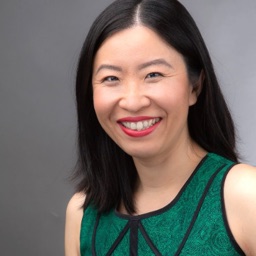
Welcome to In the Making with Joanna Liu
Last weekend, I went into the mountains. Something happened there that reminded me how much our bodies can tell us about the lives we're living.
One morning, I woke up at seven, after sleeping as deeply and peacefully as a baby. For a moment, I felt so strange because there was nothing to organise: No long to-do list waiting to be completed, No unfinished conversations to think about, No decisions demanding immediate attention, Nothing that needed to be held tightly together. Every muscle in my body felt unusually relaxed.
It was almost as if something I'd been carrying for a long time had quietly disappeared overnight. And outside, the mountains offered a beautiful image of exactly what I was feeling. Snow melting in the morning sunlight. There was no effort involved. No struggle. No need to force anything to happen. As the sun rose, the snow simply began to melt. And the tension in my body seemed to be doing the same. Layer by layer, the tightness was disappearing. It made me start thinking:
How much of the tension we carry through life becomes so familiar that we no longer notice it?
And perhaps more importantly:
Can we become stronger through everything we experience, without becoming harder as people?
The invisible armour we carry
Think about the way people respond to difficult experiences. Someone begins a new job with enthusiasm, but after months of criticism, disappointment, or uncertainty, they become more cautious.
A person starts a business with an open mind, but after several unsuccessful collaborations, they begin questioning everyone's intentions.
Someone enters a relationship with trust, experiences betrayal or misunderstanding, and becomes reluctant to let another person get close again.
These responses are understandable. Our experiences shape the way we see the world. When something hurts, people naturally try to avoid being hurt in the same way again. They become more careful. They learn to recognise warning signs. They establish boundaries and become more selective about where they invest their time, energy, and trust. These changes can be valuable.
Experience can develop judgment. But something else may happen along the way.
A person becomes so accustomed to protecting themselves that they gradually stop noticing how much energy protection requires. They may become suspicious before there is a reason to be suspicious, expect disappointment before giving an opportunity a chance, avoid asking for help because independence feels safer than vulnerability, after a while, this way of living can begin to feel normal. Like carrying a protective shell that has become part of the body.
At first, the shell helps us manage difficult experiences, eventually, we may discover that some of the protection we once needed has become something we're carrying everywhere. Even when the original danger is no longer present.
What happens when we finally relax?
There is something remarkable about the moment when tension begins to disappear. Often, people don't fully recognise how tense they've been until they experience the opposite. For example, someone returns from a peaceful holiday and suddenly notices how tightly they've been holding their shoulders, or spent a quiet weekend away from their usual environment and discovers that they can sleep more deeply than they have in months.
The body doesn't always provide a complete explanation of what we're feeling. But sometimes it draws attention to a pattern we've stopped questioning.
We may have become accustomed to constant readiness. Always preparing for the next task. Always anticipating the next problem. Always considering what needs to happen tomorrow, because this way of living is so common, we rarely ask whether it is necessary to remain in that state all the time.
What makes relaxation interesting is that it doesn't always come from solving every problem. The unfinished tasks may still exist. The difficult conversations may still be waiting. The uncertainty about the future may not have changed at all, yet, for a few hours, the body lets go. The mountains haven't resolved the problems of everyday life. But they may remind us that we don't need to hold every problem in our bodies every moment of the day. Perhaps the ability to release tension is also something we can practise. Not by pretending that difficulties don't exist. But by recognising that carrying them constantly doesn't necessarily help us solve them.
Becoming stronger doesn't have to mean becoming harder
When people talk about personal growth, strength is often associated with toughness. Someone becomes stronger because they've experienced disappointment. Someone becomes wiser because they've learned not to trust people so easily. Someone becomes more independent because they've discovered that they cannot always rely on others.
There can be truth in these observations. But they raise another question: Is becoming stronger always the same as becoming harder?
Consider someone who has experienced a difficult professional collaboration. They trusted a partner, invested significant time in a project, and later discovered that their expectations were very different. Afterward, they have several choices. They might decide never to collaborate with anyone again. They might approach every future partnership with suspicion. Or they might examine what happened and learn how to make clearer agreements, communicate expectations, and recognise problems earlier.
These responses are not identical. One closes the door to future possibilities. The other develops judgment while allowing new relationships to remain possible.
The same distinction appears in personal relationships. After an experience of disappointment, a person may become more careful about trust. That can be healthy. But being careful doesn't have to mean becoming incapable of trusting anyone. Having boundaries doesn't require becoming emotionally unavailable. Understanding that people are complicated doesn't mean assuming that everyone is acting with bad intentions. Perhaps genuine strength is not measured by how little we allow ourselves to feel. It may be reflected in our ability to remain open while making better decisions about where openness belongs.
We can learn to protect ourselves without losing our capacity for kindness. And we can become more experienced without allowing every difficult experience to turn into cynicism.
The difference between innocence and sincerity
There is a Chinese expression that captures something important here: keeping the soul clean. It can sound rather idealistic.
What does it mean to keep a clean soul in a world where people experience competition, disappointment, misunderstanding, and conflicting interests? It certainly doesn't mean remaining innocent about how the world works. People need judgment. They need to recognise unhealthy situations. They need to know when to say no, when to leave, and when to stop giving their energy to something that isn't working. But there is a difference between understanding complexity and becoming defined by it.
A person can recognise that not everyone will act fairly without deciding that fairness is meaningless. Someone can experience dishonesty without believing that honesty is foolish. They can become more selective about whom they trust without losing the desire to build sincere relationships. This distinction is important because people sometimes confuse sincerity with naivety.
Being sincere doesn't mean believing everything. It doesn't mean agreeing with everyone. And it doesn't mean sacrificing personal boundaries to avoid disappointing other people. Sincerity can be a conscious choice made with a clear understanding of reality. It is possible to see the complexity of human behaviour and still choose not to become unnecessarily calculating or cold.
There is a quiet kind of courage in that. Not the courage of someone who has never been disappointed. But the courage of someone who understands that disappointment is possible and still wants to participate fully in life.
What creating something teaches us
This brings us to the experience of creating.
A person might begin with a business idea, an artistic project, a career change, or something they want to build within their community. At first, the idea exists mostly in imagination. There is a sense of freedom in thinking about what it could become. But once the person begins, reality enters the picture. The work is more complicated than expected. Other people have different opinions.
Some plans fail. Progress is slower than anticipated. And sometimes the creator begins questioning not only the project, but themselves. This is where creating can become something more than producing an external result. It gives people opportunities to observe how they respond when their expectations meet reality.
Do they become defensive when someone offers criticism? Can they reconsider a decision they've already invested heavily in? Do they know when to persist and when to stop? Can they work with people who think differently? Can they remain curious after discovering that an idea wasn't as strong as they believed?
These are not qualities people develop simply by describing themselves as patient, flexible, or open-minded. They become meaningful through practice. Someone can imagine being patient. But patience becomes real when progress is slow. Someone can admire honesty. But honesty becomes more demanding when admitting a mistake carries consequences. Someone can believe in collaboration. But collaboration becomes a real skill when people disagree about important decisions. Creating brings these qualities into everyday experience. And through repeated experiences, people can develop a clearer understanding of themselves.
Stability is not the absence of change
There's an interesting contradiction in the way we think about stability. People often imagine a stable sense of self as something fixed. A person who always knows what they want. Someone whose confidence is unaffected by criticism. Someone who never questions their decisions. But is that really stability? Consider a person who has invested years in developing a particular career. Over time, they begin to realise that the work no longer fits their values or the life they want. They could continue along the same path because changing direction would challenge their identity. Or they could examine what they've learned and choose something different. The second option may involve uncertainty.
There may be financial considerations, professional risks, and difficult conversations. But changing direction doesn't necessarily mean losing oneself. Sometimes it means recognising oneself more clearly. A stable sense of self may have less to do with preserving every decision and more to do with maintaining the ability to make decisions responsibly.
Everything can change, but they don't have to become permanent limitations on who that person can become, stability is not rigidity, it is the ability to remain grounded while continuing to evolve.
Creating in the age of AI
This question becomes particularly relevant in the age of AI. The opportunities available to individual creators are changing rapidly. A person can now experiment with writing, design, software, research, and digital products using tools that make previously difficult tasks more accessible. This can be empowering. But increased capability also brings new expectations.
If technology makes us more productive, should we produce more every day? If AI allows one person to perform the work of several people, should that person take on more responsibilities? And when new opportunities appear almost constantly, how do we decide which ones deserve our attention? Technology can provide options. But having more options doesn't automatically create a clearer sense of direction. Someone may become highly efficient at completing tasks while remaining uncertain about why those tasks matter. A person may produce more content than ever before but feel less connected to what they're creating. They may become better at responding to external demands while gradually losing track of their own priorities. This is why the ability to make thoughtful choices remains important.
The question is not simply what we can create. It's what we consider worth creating.
What deserves our time? What kind of work contributes to the life we want to live? And what are we willing to leave unfinished so that other parts of life can have room to exist?
These questions require more than technical ability. They require judgment, experience, and an understanding of our values.
Why we still need other people
There's another important part of becoming more grounded. The role of other people.
Personal growth is sometimes described as becoming completely independent. Someone who doesn't need approval, doesn't rely on others, and remains unaffected by other people's opinions.
But independence doesn't have to mean isolation. People discover important things about themselves through relationships. Others can challenge their assumptions. They can offer perspectives that weren't previously considered. They can notice changes that are difficult to recognise from the inside. And they can help make the process of creating less lonely. Think about people working together in a coworking space. They may be involved in completely different projects. One person is building a business. Another is searching for a new job. Someone else is trying to finish a creative project. Each person has their own responsibilities. Yet being together changes something about the experience.
An ordinary conversation can help someone clarify a difficult decision. A question from another person can reveal an assumption that has gone unexamined. And sometimes simply seeing someone else continue working through uncertainty provides encouragement.
This doesn't mean community can solve every problem. Nor does it mean that people should depend on others to constantly confirm their value. A healthy community can offer something quieter. A place where people can be independent without being alone. Where they can receive support without giving up their own judgment. Where they can be influenced by others without needing to become like them. Perhaps that's another form of stability.
Being secure enough in ourselves to remain connected to the world around us.
Sometimes growing means letting something melt
Let's return to the mountains for a moment. When snow begins to melt in the morning sunlight, it doesn't require force. The conditions have changed. What was frozen begins to soften. And there is something beautiful about watching a transformation happen without resistance. Human beings are more complicated than snow, of course. Not every emotional difficulty can be resolved through rest. Not every protective habit disappears when someone takes a holiday. Some experiences require time, difficult conversations, professional support, or significant changes in circumstances. But the image offers a useful reminder.
Not every transformation needs to happen through greater effort. Sometimes growth requires learning something new. Sometimes it requires confronting a difficult truth. And sometimes it requires letting go of a way of protecting ourselves that is no longer helping. A person may become more grounded not by adding another achievement to their life, but by discovering that they don't need to carry every responsibility at once. They may become stronger not by controlling every outcome, but by accepting the limits of their control. They may become wiser not by becoming suspicious of everyone, but by learning to distinguish between openness and the absence of boundaries.
There is a different kind of strength in being able to soften. Not because life has become simple. But because a person no longer needs to respond to every complexity by becoming harder.
Who are we becoming while we create?
At NoCrastination, there is a principle we often return to. Creation is our path. Practice is our truth. In Chinese, it is expressed as: 修行中创造,创造中修行。
Creating is not only about producing something useful or beautiful. It can also be a way of developing judgment, understanding our values, and recognising how we respond to the world. But this doesn't mean that every moment must become productive.
Rest is not wasted time. A peaceful weekend doesn't need to produce an important insight to be worthwhile, the value of an experience is simply that it allows us to be fully present, that presence is something we need more of as our ability to produce continues to grow.
There is a tendency to imagine that becoming a better version of ourselves means adding more. More skills. More knowledge. More achievements. More discipline.
But part of growing also involves discovering what we no longer need to carry. An unnecessary expectation. An old disappointment. The need to control everything. Or the belief that protecting ourselves always requires becoming less open to others.
When these things begin to loosen, something else becomes possible. A person can remain ambitious without being constantly tense. They can care deeply about their work without allowing every result to determine their worth. They can establish boundaries without losing their kindness. They can understand how complicated people are without becoming cynical about human relationships. And they can continue creating without turning their entire life into a list of tasks to complete.
As Christmas approaches, life may become busy again, there will always be another deadline, another decision, and another opportunity demanding our energy, but moving forward doesn't have to mean tightening our grip on everything.
It is a reminder that responsibility doesn't always require tension, becoming stronger doesn't mean we need to become harder.
Before we finish, there's a question worth sitting with. Think about the person you were a few years ago. Consider the experiences you've had since then. The things you've created. The people you've met. The disappointments you've worked through. The lessons you've learned. Some of those experiences may have made you more capable. Others may have made you more careful. Have they also changed how open, trusting, or sincere you allow yourself to be?
What would it mean to keep the wisdom you've gained without carrying all the hardness that may have come with it?
Building a more stable sense of self may not be about creating a version of ourselves that can never be hurt or changed.
Perhaps it's about becoming someone who can experience life fully, learn from what happens, and remain connected to what matters.
Someone who can become more experienced without becoming cold.
Someone who continues to grow while preserving the ability to be sincere.
And maybe that is one of the most beautiful things we can practise through creating.
Not simply becoming more successful.
But becoming more fully human.
I'm Joanna.
Thank you for listening to In the Making with Joanna Liu.
I'll see you next time.