
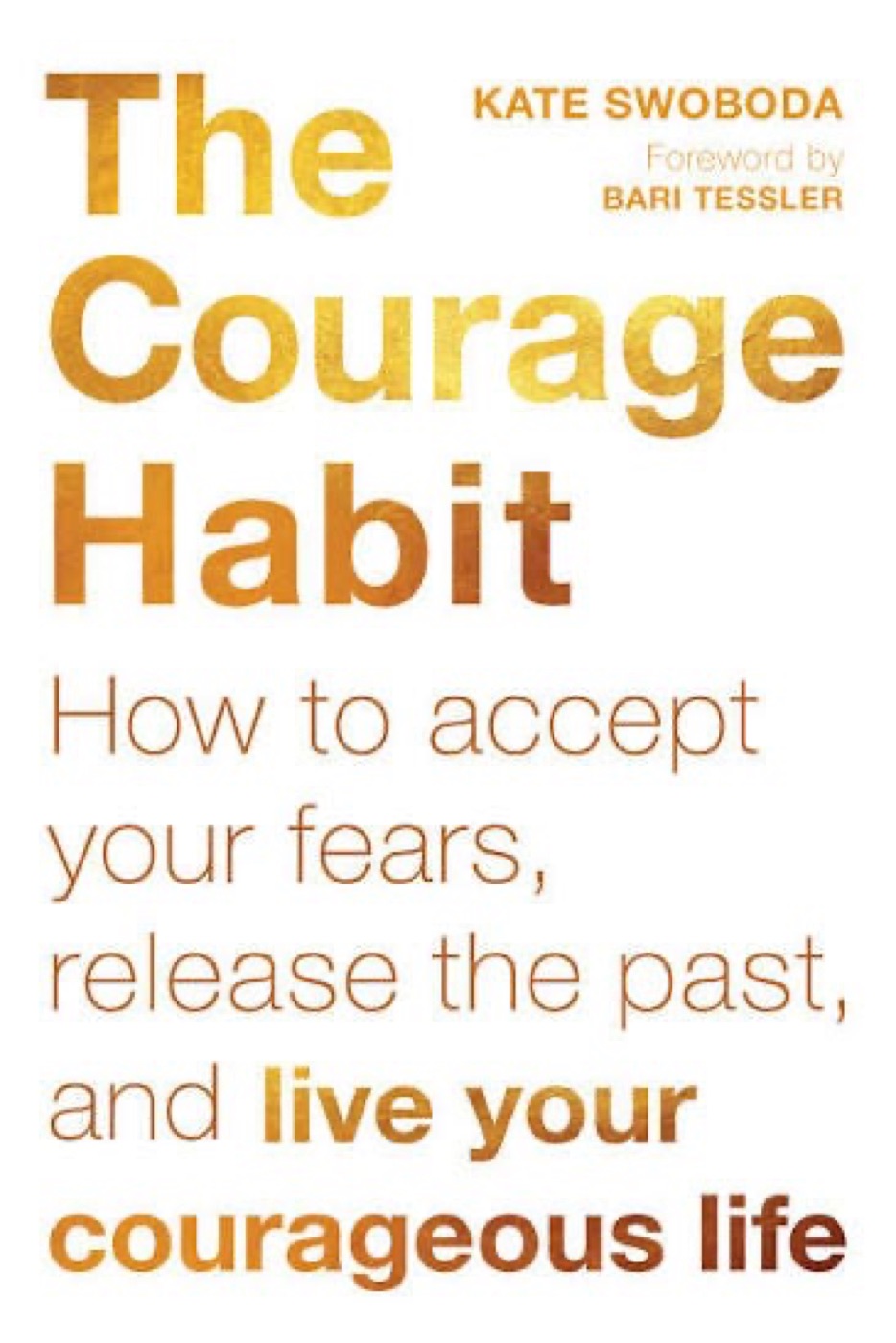
Tonight we explored The Courage Habit and what courage can look like in everyday life.
Rather than simply talking about being “brave,” the discussion brought us back to something more practical: What is stopping us from becoming the person we want to be?
1. What would your most courageous life look like?
One of the exercises in the book asks us to imagine our most courageous life.
Interestingly, this was not easy for everyone.
Sometimes we already are doing courageous things without recognising them. Changing careers, trying something new, continuing despite uncertainty, or simply showing up consistently can all require courage.
The question is not only “What would I do if I were more courageous?” but also:
“Where am I already being courageous, and where am I still holding myself back?”
2. Limiting beliefs can hide in unexpected places
One of the strongest moments of the discussion came from recognising a limiting belief that had previously gone unnoticed.
The book tells the story of someone who believed that having a stable job meant losing freedom and that life would become boring and meaningless.
That story prompted a realisation: sometimes we have deeply held beliefs about relationships, work, success, or stability that feel like objective truths.
But they may simply be beliefs we have never questioned.
A powerful question to ask ourselves is:
“Is this actually true, or is this just the story I have been carrying?”
3. Fear often disguises itself as logic
We discussed how the mind can try to protect us whenever we feel stressed, uncertain, or vulnerable.
It may give us very convincing reasons to stay where we are:
“I’m not ready.”
“Maybe tomorrow.”
“This isn’t the right time.”
“I probably can’t do this.”
Sometimes these thoughts feel rational because they are familiar.
Recognising them is the first step toward choosing whether we actually want to follow them.
4. The inner critic does not have to be in charge
Several reflections connected with the idea of the inner critic.
That voice can tell us that we are not good enough, that we will fail, or that something is beyond our ability.
The discussion explored the possibility that these thoughts are not necessarily facts. They are thoughts shaped by our experiences, beliefs, and fears.
Instead of fighting every thought, we can notice it, question it, and create some distance from it.
A thought can be present without becoming a decision.
5. We don’t always see our own blind spots
One important insight was that challenging our own limiting beliefs can be difficult.
After all, a belief feels true precisely because our mind has already built a story around it.
This is where other people become incredibly valuable.
A friend, accountability partner, or community can sometimes see something that we cannot see ourselves.
Someone asking a simple question can make us pause and reconsider an assumption we have carried for years.
6. Courage becomes easier with accountability
The conversation also brought us back to the power of showing up together.
When we know someone else is expecting us, it becomes harder to keep postponing.
A consistent group can become a witness to our growth.
Week after week, every Monday evening at 7pm in Zoom, we read, reflect, share, and keep moving forward.
The progress may feel small in one individual session, but over time it starts to compound.
Sometimes courage is not a huge leap. It is simply showing up again.
7. We all have different courageous areas
Another interesting point was that courage is not the same for everyone.
Something that feels easy for one person can be deeply challenging for another.
We may be courageous in our careers but fearful in relationships.
We may be comfortable speaking publicly but struggle to make personal changes.
We may be adventurous in one area of life and extremely cautious in another.
So perhaps the question is not:
“Am I a courageous person?”
But:
“Where in my life am I courageous, and where am I still allowing fear to lead?”
8. You don’t have to do it alone
One of the strongest themes running through the evening was the importance of having people around us who encourage us.
Accountability partners can help us continue when motivation disappears.
Friends can remind us of our capabilities when we temporarily forget them.
And a community can create a space where we can say, “This is what I am struggling with,” without needing to have everything figured out.
That may be one of the most practical forms of courage: being willing to be seen while we are still figuring things out.
A question to take into the week
Instead of asking ourselves to suddenly become fearless, perhaps we can ask:
What is one thing I would do differently this week if I trusted myself a little more?
Then take one small step.
Not because the fear has disappeared.
But because we have decided that fear doesn’t get to make every decision for us.