
Tonight’s discussion explored how courage, fear, self doubt, and our relationship with our bodies influence the choices we make in everyday life.
One theme connected all our reflections:
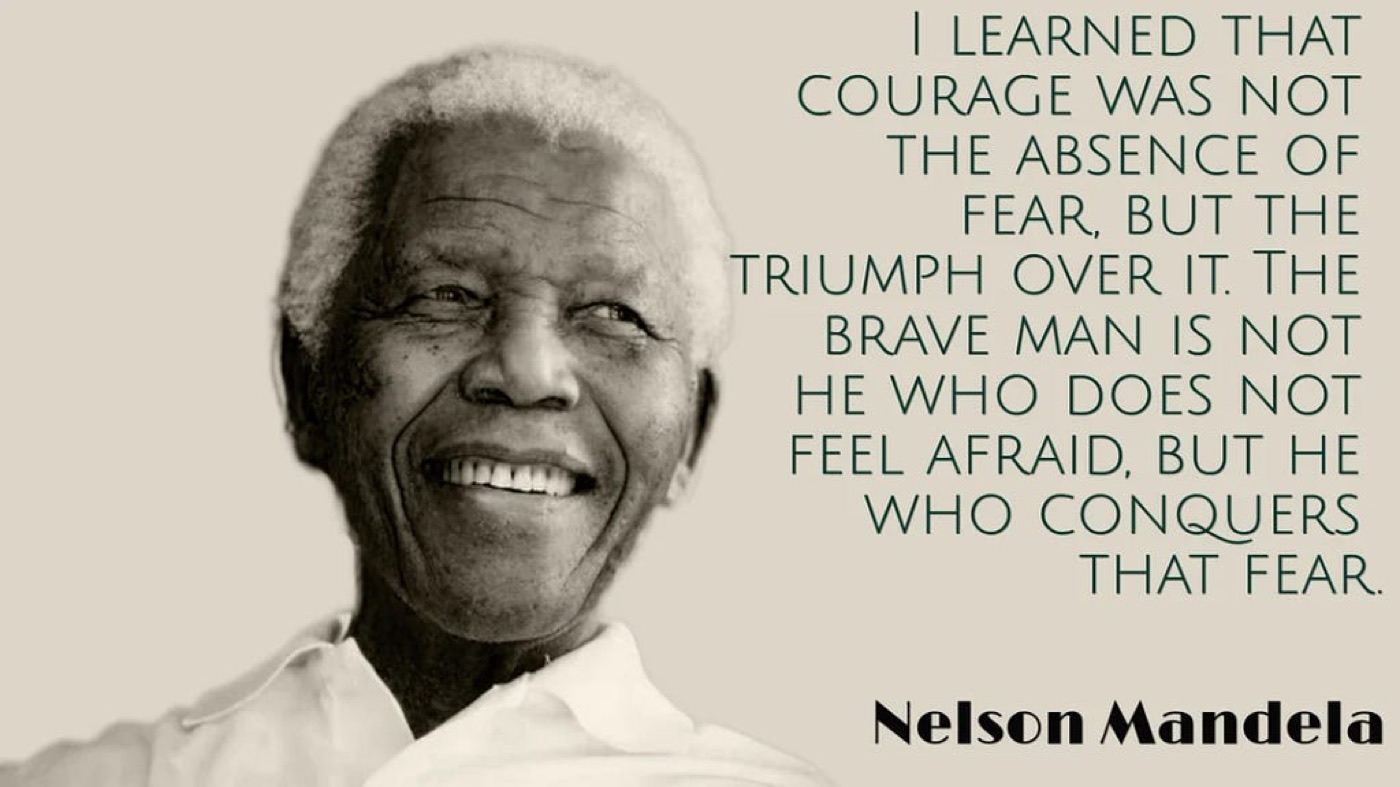
Courage is not about having no fear. It is about recognising fear, understanding it, and choosing how to respond.
1. Courage can help us change the direction of our lives
We reflected on the experience of recognising that a conventional career or lifestyle may not be right for us.
There is nothing inherently wrong with having an ordinary job or following a familiar path. But sometimes we realise that the path we are on does not align with our values, interests, or vision for life.
Making a change requires courage, especially when it means leaving behind familiarity, starting again in a new country, or creating a different professional direction.
Courage can become a habit that helps us move forward, even when the next step is uncertain.
2. Fear is also experienced through the body
One chapter introduced the practice of body scanning.
Instead of immediately trying to find an answer or force ourselves to feel a certain way, we can move our attention through the body and ask a neutral question:
“What is happening here?”
We can begin with our feet and gradually move upward, noticing sensations in different parts of the body.
The important part is not to judge what we discover.
If we notice pain, tension, discomfort, or another sensation, we can approach it with curiosity and compassion:
“What might be happening?”
“What could have contributed to this?”
“What does this part of my body need?”
The practice encourages us to investigate our feelings rather than dismissing or overriding them.
3. We do not have to run away from difficult feelings
Several reflections explored the habit of avoiding fear, sadness, and discomfort.
When difficult emotions appear, our first instinct may be to distract ourselves, disconnect, or push the feelings away.
However, avoiding an emotion does not necessarily resolve it.
The book offers another approach: acknowledge the feeling, allow ourselves to experience it, and create space to process it.
One practical method discussed was setting a specific amount of time to sit with an emotion. When the time is over, we can return to our daily activities and continue moving forward.
This creates a balance between making space for our feelings and not allowing them to consume the entire day.
4. Fear, intuition, and emotional safety
One of the deepest discussions focused on the difference between running away because of fear and stepping away because our intuition is telling us something important.
This can be especially difficult in relationships.
When conflict, misunderstanding, or emotional discomfort appears, we may wonder:
Should I stay and communicate?
Should I try to repair the situation?
Am I avoiding intimacy because I am afraid?
Or is this relationship genuinely not safe or healthy for me?
There is no simple answer for every situation. The discussion highlighted the importance of examining both our emotional state and the environment we are in.
Some useful questions include:
Do I feel emotionally safe with this person?
Do I feel safe expressing myself and communicating?
Am I reacting from fear, or am I recognising something that does not feel right?
How emotionally regulated do I feel within myself?
Before assessing another person or relationship, it can also be helpful to honestly examine our own emotional state.
5. Disconnection and the importance of communication
We shared experiences of feeling disconnected from people, including friends and family members.
Sometimes disconnection happens because people live in different places or because communication gradually disappears.
In other situations, a relationship may naturally come to an end.
The discussion recognised that not every relationship can or should be repaired through effort alone. Communication requires participation from both sides, and we cannot force another person to engage.
The important practice is to reflect, communicate where possible, and recognise when it may be time to let go.
6. Small actions can help us move through fear
One reflection explored the experience of starting a new job while facing uncertainty about language skills.
Instead of running away from the situation, a small practical step was taken: preparing vocabulary in advance and learning the words that might be needed in the workplace.
This did not eliminate the fear immediately, but it reduced uncertainty and created more confidence.
The experience offered a powerful reminder:
We do not always need to solve the entire problem at once. One small action can open the next door.
Facing fear often involves doing the difficult, sometimes uncomfortable work of learning, preparing, practising, and improving.
7. It can be easier to act courageously when we are helping others
We discussed how personal goals can become more meaningful when they are connected to supporting other people.
For some of us, helping others feels easier than doing something purely for ourselves.
One reflection shared how taking responsibility for a community created the motivation to continue, even when the situation was uncertain and the person did not initially feel prepared.
The desire to support the people who depended on the community became a reason to keep learning, improving, and showing up.
This led to an important insight:
Sometimes our courage becomes stronger when our actions serve something beyond ourselves.
8. Admitting fear is a form of courage
We also explored the myth that courageous people are fearless.
In reality, people can feel fear and self doubt while still choosing to move toward what they want.
Admitting fear can be difficult. Sometimes we hide it from other people and even avoid acknowledging it to ourselves.
But when we name the fear, either privately or with someone we trust, it can become easier to understand and process.
Fear can also appear in less obvious forms, such as:
Feeling overwhelmed
Procrastinating
Struggling with time management
Becoming overly active or stressed before a deadline
Avoiding a task because we are afraid of not doing it well
Recognising how fear shows up in our own lives is an important first step.
9. We all experience fear differently
The discussion reminded us that fear does not look the same for everyone.
One person may experience fear through avoidance. Another may become overwhelmed or overactive. Someone else may struggle with self doubt, perfectionism, or difficulty making decisions.
There is no single universal way to experience or process fear.
The invitation is to become curious about our own patterns:
How does fear show up in my body, behaviour, relationships, and daily routines?
Understanding our personal patterns can help us choose more consciously how to respond.
A reflection to take into the week
This week, we can try pausing when we notice fear or discomfort.
Instead of immediately running away, ask:
What am I feeling?
Where do I feel it in my body?
Am I responding from fear, intuition, or a need for emotional safety?
What is one small action I can take instead of avoiding the situation?
We do not need to become fearless overnight.
We can begin by noticing, acknowledging, and taking one small step forward. That is how courage becomes a practice.