
Lately, I’ve been preparing our AI courses and evening practice sessions. Every time I open my laptop, there’s something waiting for me. I might start by updating a course page, move on to writing promotional content, and then notice something in the booking process that needs fixing.
With this kind of work, it’s difficult to reach a point where you can say, “That’s everything done for today.” There’s always something else.
A little while ago, I started paying closer attention to my energy. I used to think mostly about time. There are only so many hours in a day, and once I’ve committed to something, I want to make good use of them. But I began noticing that I could spend hours at my computer, making real progress, while feeling increasingly tense.
The tension came partly from an expectation I hadn’t quite acknowledged: I’ve put so much into this. Shouldn’t I be seeing some results by now? Of course, things unfold at their own pace.
Updating a course page doesn’t mean someone will immediately book. Publishing a post doesn’t mean people will understand why this work matters to me. Sometimes I think I’ve explained something clearly, then read it again and feel there’s still something missing. So I keep editing.
Somewhere in that process, I started wondering whether focusing so closely on the progress of my work was making me overlook something else. How was this work changing me? That’s where I’d like to begin today. There’s a belief I’ve been trying to put into words. In Chinese, I describe it as:
修行中创造,创造中修行。
The word 修行 can suggest spiritual practice. Here, I’m using it to mean the ongoing work of becoming more aware of ourselves through everyday life. The phrase means bringing that awareness into what we create, while allowing the act of creating to deepen our awareness.
Alongside it is another thought: Your contribution isn’t simply the part of yourself you give away. It’s who you become. Let me explain what I mean.
Waiting for a reply
There’s a very ordinary moment in building something of your own. You’ve carefully written an introduction to your project. As you’re writing it, the idea makes sense. You believe it has value. You send it out, and then you wait. After a while, you check for a response. You get on with something else. Later, you check again.
If you’ve ever tried to bring your own project into the world, you probably know this feeling. On the surface, you’re waiting for a reply. But sometimes there’s much more sitting inside that wait. You want someone to understand. You want your effort to be seen. Perhaps you’re also hoping their response will reassure you that this matters, that you should keep going.
And when the response doesn’t come, other thoughts can begin to appear. Did I do something wrong? Maybe this isn’t as important as I thought. Before long, “How could I improve this introduction?” has become “Am I actually capable of making this work?” I’ve become more interested in that small turn. We don’t always notice when a single attempt becomes a judgment about our whole selves.
Entrepreneurship gives us plenty of opportunities to make that leap.
The number of people signing up for an event can start to feel like a measure of my ability to bring people together. Uncertainty about whether a project can continue can become uncertainty about whether there’s something wrong with me.
Of course, I need to review my work honestly. But if every review puts me on trial, it becomes exhausting. And it’s a kind of exhaustion that an extra night’s sleep doesn’t necessarily resolve. The next morning, I open my laptop and begin trying to prove myself all over again. I don’t want that to become my permanent way of working.
I’ve also learned that telling myself, “Don’t care so much,” rarely helps. If I started something, invested my time, and took responsibility for it, of course I care. Pretending the outcome doesn’t matter wouldn’t be honest.
Untangling what I actually care about
So these days, I’m more interested in understanding exactly what I care about. If fewer people register than I hoped, I may be worried about whether the event can go ahead. That’s a practical concern. It needs a practical response. But I may also be worried that other people will think I’m doing badly.
When those concerns get tangled together, I can become restless. I want to act immediately. Perhaps I should publish another post, or make another change to the page.
Sometimes those actions help. Sometimes taking action simply gives me temporary relief from the feeling that I’m standing still. That’s uncomfortable to admit. It can be harder to acknowledge that anxiety is driving some of my work than to acknowledge that a particular marketing approach isn’t working. But seeing it gives me a chance to pause.
I can look carefully at what needs changing on the page. And I can give some attention to my doubts about my own ability, without letting those doubts quietly shape every business decision. This is where that practice of self-awareness begins for me.
I’m still in the middle of everyday life. The work continues. I’m just starting to notice the state of mind I bring to it.
Growth as more room to accept
When I used to think about growth, I usually imagined a more capable version of myself. She would handle more complicated problems. She would be steadier under pressure. When the same difficulty came around again, it wouldn’t affect her quite so much. That’s an understandable hope. But if I constantly compare myself with that imagined version, growth becomes another demand.
I’m already having a difficult day, and then an extra voice appears: “Why haven’t you learned how to deal with this yet?” Even the time I need to recover becomes something I’m supposed to improve. That’s why I’ve been thinking about growth differently.
For me, growth is an expansion of our capacity to accept.
When I say that, I picture a little more room inside. In the past, something disappointing might quickly take up all the available space. I would keep turning it over, looking for an explanation, even when I had no new information to work with.
What I hope to develop is some space around the experience.
I can still feel disappointed while recognising that this is a particular disappointment, connected to a particular event. I can let myself feel it for a while. Once I’m a little calmer, I can decide whether I need to change my approach. The situation hasn’t magically become easier. But my relationship with it may have shifted. I can spend a little longer with a question I can’t yet answer. To me, that already feels like growth.
What acceptance looks like at work
Acceptance used to confuse me. It sounded as though I was supposed to accept whatever happened and stop trying to change it. But when I bring the idea into my work, it becomes quite practical.
Suppose a project hasn’t received much interest. Acceptance means being willing to acknowledge where things stand. Perhaps I haven’t found a clear way to explain it. Perhaps I haven’t reached the people who need it. There’s also the possibility that the idea itself needs to change.
Once I can admit those possibilities, I can begin making a more useful decision.
If I’m attached to the thought that the idea is obviously good and people ought to understand it, I may struggle to hear anything useful in their feedback. Sometimes acceptance also leads to a decision I don’t particularly like.
I may need to pause.
Continuing to invest in something isn’t always the best choice. Acknowledging that takes courage, especially when I’ve already given it a lot. It’s easy to think, “Just a little more. Perhaps the next attempt will be different.” Sometimes persistence is exactly what’s needed. At other times, it’s difficult to let go of the person I was when I began, the person who felt so hopeful about what this could become. I don’t have a reliable formula for telling those situations apart.
But there’s a question I’d like to answer more honestly: If I encountered this project for the first time today, knowing what I know now, would I still choose to invest in it this way? The answer may take time. Even asking the question helps me look again at why I’m continuing. This is part of what I mean by growing through what we create.
While an idea lives only in our minds, our understanding of it is limited. It can feel complete and promising. The difficult parts can wait until later. Once we begin, those difficulties become specific. We have to choose where to start. We need to explain the idea to someone else and eventually face their experience of using what we’ve made. That process reveals things we couldn’t see before.
Sometimes we discover a problem with the project. Sometimes we discover something about ourselves. For example, I might think I’m open to feedback. Then someone offers a criticism, and my first instinct is to explain why I designed it that way. There may be a good reason for my decision. But while I’m explaining, I may be missing what they’re trying to tell me. Perhaps they’re simply saying, “I found this confusing.” And I’ve already begun defending the time I invested, along with my image of myself as someone who should have thought everything through. Making something gives me a chance to notice that reaction. It also gives me a place to practise a different response. Next time, perhaps I can ask, “Where did it start to become unclear?” Then I can let them finish.
That small change feels more useful to me than simply telling myself to be more open-minded.
Your contribution is who you become
I’ve also been thinking about what I mean when I say that our contribution is who we become. Taken on its own, it could sound as though our actions no longer matter. What I’m trying to express is that something of who we are enters the things we do. Imagine sharing an idea that you haven’t fully worked out yet.
The person listening may be experienced and able to identify real problems. But if the way they speak makes you increasingly reluctant to say anything, that feeling becomes part of what you take away from the conversation. Someone else might leave the problem unresolved. They listen carefully and ask a question that stays with you. Later, you suddenly understand what you could do next. I’ve wondered what makes that second encounter helpful.
Perhaps the person doesn’t feel a need to demonstrate how much more they know. They can give you time to find the words. Their contribution happens within that particular conversation. And the way they participate grows out of the person they have become. That’s why, for me, becoming shows up in small moments.
When someone needs a little more time, can I wait? When I’m uncertain too, can I admit it, instead of rushing to offer an answer? These moments rarely attract much attention. Yet they influence how freely someone else can express themselves around me.
I hope my own growth will gradually find its way into those details.
This is something I want to keep learning through NoCrastination.
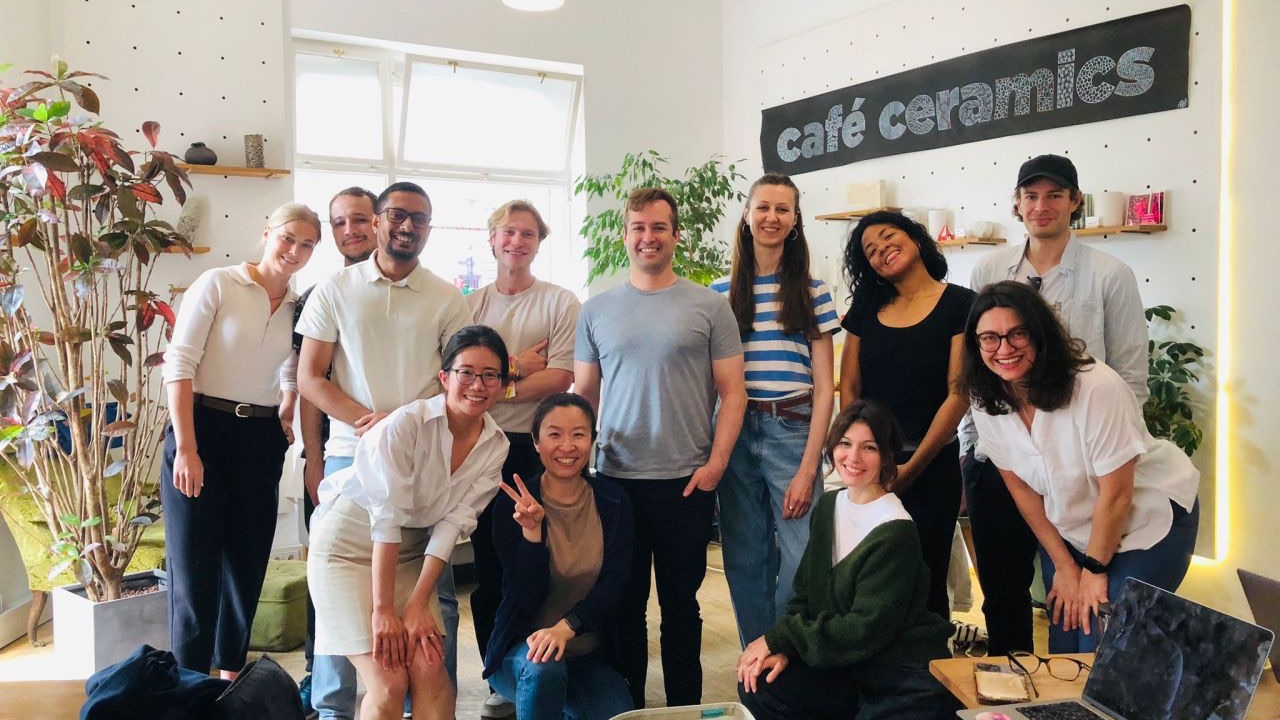
Organising a coworking session or preparing a learning event involves a lot of practical decisions. The timing and structure need care. But through those decisions, I’m also helping to shape an environment where people meet. Someone arriving for the first time may be wondering whether they belong. Perhaps they haven’t tried anything new for a while. Their idea may still be difficult to explain. They just know they want something to change.
If I’m too eager for everyone to show a result, I might overlook the time that person needs before they can begin. But without enough movement, they might leave with the same uncertainty they arrived with. I have to learn that balance through practice.
I’d like to become better at recognising when a specific question would help, and when someone needs a moment of quiet. I also want to hear what participants actually experienced, even when an event hasn’t lived up to my own expectations. Their experience may be very different from mine.
A part I felt unhappy with might have helped someone understand something important. A part I thought went well might have meant very little to them. I can only find out by continuing to listen. That makes building a business a surprisingly personal kind of learning. As I develop a project, I’m also learning how to relate to the people involved.
Staying involved when AI makes it fast
AI adds another dimension to this for me. It’s now possible to get started much more quickly. Something that once took a long time to draft can become a workable first version quite soon. For a beginner, that can make a real difference. It becomes easier to try. But I also remind myself that, once I have something that looks complete, I can spend a little longer with it.
I might be reading an article draft and come across a paragraph that doesn’t sound like something I would say. I could leave it there. Or I could ask myself, “What do I actually believe about this?” Sometimes that slight friction is where an idea begins to become clearer. I have to find different words. Occasionally, I discover I haven’t really thought the point through.
That process may take longer than simply publishing the draft. But it gives me a better understanding of what I’m putting my name to. I want to keep that part of the process. When a piece of work is finished, I want to feel that I participated in its formation. Even if that participation meant pausing at one particular point and making a considered choice.
Energy, rest and courage
Our book club has also brought me back to these questions. We spent some time exploring courage. One thing it led me to consider was how much our energy affects our willingness to take a step. The same challenge can feel very different depending on the state we’re in. Sometimes I think I’m lacking courage when I’m already depleted. That’s one reason I’ve started taking rest more seriously.
I used to find it easy to postpone a break while something remained unfinished. But something always remains unfinished. If I wait until everything is done, I could be waiting for a very long time. Gradually, I’ve come to see acceptance as including the fact that my capacity changes from day to day.
Sometimes I can concentrate and move through my work quite quickly. On another day, I may need to go outside for a walk before I can see clearly. A conversation with someone I feel comfortable around might help me settle.
Acknowledging those changes gives me a better chance of finding a rhythm I can sustain. It also affects how I see other people. When I understand why I sometimes need to move more slowly, it becomes easier to remember that someone else may be carrying something I can’t see. I can still have expectations. We can still talk about commitments. I just hope to leave some room in those conversations for the circumstances people are actually living through.
If you asked me what I want from entrepreneurship, I would say that I want the project to be sustainable. I want people to find enough value in what we offer that they’re willing to pay for it. Those are practical goals, and I take them seriously.
Alongside them, I hope that when I look back on this period, I’ll recognise a change in how I respond to things. Perhaps a rejection will no longer follow me around for quite so long. I might remember a conversation that could easily have become an argument, but where I stayed long enough to understand the other person. Or I may have learned to ask for help at a point when I would once have insisted on carrying everything myself.
Those changes may never appear in a business review. But they will come with me into whatever I do next. They will affect the next person I work with, and the next relationship I enter. I think my contribution will continue through them. Because I bring myself into the work, too.
A small reflection to try
Before we finish, I’d like to leave you with a small reflection: Think of something that has been bothering you repeatedly. It doesn’t have to be the biggest problem in your life. Perhaps it’s a reply you’re still waiting for, or a task you keep avoiding.
Find a quiet moment and ask yourself: What, exactly, feels difficult about this? Give yourself some time. The first answer may only be part of it.
At first, you might think the problem is that someone hasn’t replied. Looking a little more closely, you may realise how much you were hoping that reply would reassure you about yourself. For now, noticing that can be enough.
You don’t have to immediately persuade yourself to let it go. When you’re ready, you can return to the practical question of what needs to happen next. That’s the space I’d like to keep making for myself. A chance to pause in the middle of doing something, understand myself a little better, and then continue with what I’ve learned. Bringing awareness into what I create, and allowing the process of creating to change me. That’s a practice I expect to keep returning to.
I’ll see you next time.